
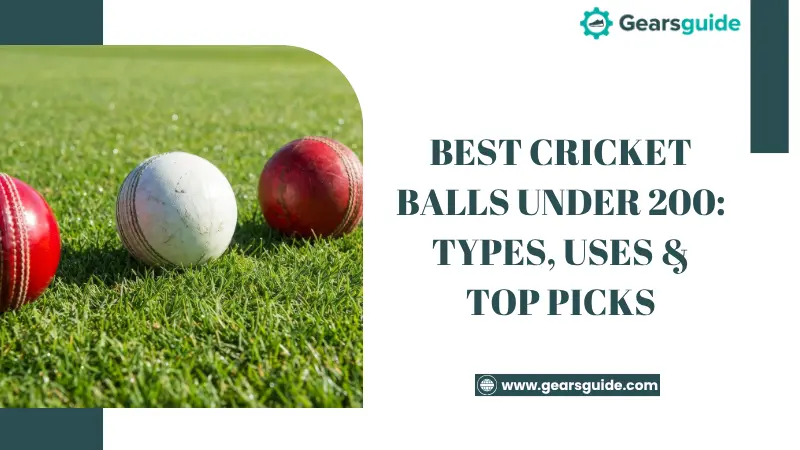
Best Cricket Balls Under 200: Types, Uses & Top Picks
Cricket is one of those sports where even the smallest equipment choice can completely change the experience. A bat gets most of the attention, but the cricket ball is the real heartbeat of the game.
Whether you are playing street cricket with friends, practicing in the nets, or preparing for local tournaments, selecting the right cricket ball matters more than most players realize. The good news is that you do not need to spend a fortune to get quality gear anymore. There are plenty of cricket balls under 200 that deliver solid durability, grip, bounce, and overall performance.
In this guide, we are going to walk through the different types of cricket balls, what each one is meant for, and which ones are actually worth buying on a budget. Whether you are a beginner just starting out, a school or college player, or someone who just loves weekend cricket — this one is for you.
Why Choosing the Right Cricket Ball Matters
Most people just grab whatever ball is available and start playing. Totally understandable. But here is where a lot of players — especially beginners — go wrong. Using the wrong type of ball for the wrong surface or format can mess up your game more than you’d expect.
Think about it. A tennis ball on a turf pitch plays completely differently than a rubber ball on concrete. A wind ball in a net session feels nothing like a leather ball in an actual match. If you are always training with the wrong ball, your grip, timing, and muscle memory all develop around something that does not match real game conditions.
And it is not just about performance either. The right ball also reduces the chance of injury, lasts longer, and honestly just makes the game more enjoyable. Small choice, big difference.
How Many Types of Cricket Balls Are There?
So if someone asks you how many types of cricket balls are there, the honest answer is — it depends on how you count them. But practically speaking, there are 6 main types of cricket balls that you will come across in India, from gully games to proper club matches.
Each one is built differently, behaves differently, and is suited for a different kind of game. Some are great for beginners, some are made for practice, and a couple are only really used in professional or serious club cricket. Here is a quick overview before we get into the details:
| Ball Type | Material | Best For | Approx. Price |
| Tennis Ball | Rubber + Felt | Street cricket, beginners, kids | ₹50 – ₹150 |
| Tape Ball | Tennis ball + Electrical tape | Gully cricket, informal games | ₹50 – ₹150 |
| Rubber Ball | Solid rubber | Practice, rough surfaces | ₹80 – ₹180 |
| PVC / Wind Ball | PVC plastic | Casual matches, indoor play | ₹50 – ₹150 |
| Cork Ball | Cork core + basic cover | School cricket, entry-level club | ₹150 – ₹200 |
| Leather Ball | Leather + cork core | Club, tournament, professional | ₹300 and above |
As you can see, most of the affordable options — the ones that fall comfortably under ₹200 — are the tennis, tape, rubber, PVC, and cork balls. Leather balls are in a different price bracket altogether, so we will just touch on those briefly for context. Let’s go through each type properly now.
| Note: If you are also looking to gear up properly, check out our guide on the best cricket pads under 2000 — solid picks for every budget. |
Different Types of Cricket Balls Explained
Now that you have a basic idea of the different types of cricket balls, let’s get into each one properly. Understanding what each ball is made of and where it actually performs well will help you pick the right cricket balls under 200 for your game. No fluff — just the useful stuff.
1. Tennis Ball
If you grew up playing cricket in India, your first ball was probably a tennis ball. And honestly, there is nothing wrong with that.
Tennis balls are made of rubber on the inside with a felt covering on the outside. They come in yellow, green, white, and red — you have likely seen all of them. They are soft, light, and easy to handle, which makes them ideal for kids, beginners, street cricket, and box cricket.
You do not need a proper pitch or protective gear when playing with a tennis ball, which is exactly why it is so popular across all age groups. It is forgiving, fun, and widely available everywhere.
Price range is ₹50 to ₹150 — very comfortably within cricket balls under 200 budget.
2. Tape Ball
The tape ball was never officially invented — it just happened organically. Players in Karachi started wrapping electrical tape around a regular tennis ball to get more pace and bounce, and the idea spread everywhere.
The tape makes the ball heavier and harder, giving bowlers a chance to generate real swing and speed. Gully cricket with a tape ball can get surprisingly competitive because of this.
The best part — you make it yourself. A tennis ball plus a roll of electrical tape costs you maybe ₹40 to ₹60 total. Among all the different types of cricket balls, this is easily the most budget friendly option. The only downside is consistency — every tape ball feels slightly different depending on how it is wrapped.
3. Rubber Ball
The rubber ball is the most practical option if you are serious about practice. It is made of solid rubber, which makes it harder and heavier than a tennis ball, with a bounce that actually feels closer to a real cricket ball.
It holds up really well on rough surfaces like concrete or gravel, so if you are practicing in a courtyard or on the road, a rubber ball will outlast a tennis ball easily.
It is also a great choice for young players who want to develop proper batting and bowling habits without jumping straight to leather. Among the types of cricket balls available under 200, the rubber ball gives you the best practice value. Price range is ₹80 to ₹180.
4. PVC / Wind Ball
The PVC wind ball is honestly underrated. It is made from hard plastic, built to take serious punishment — concrete pitches, hard surfaces, repeated use — and it still holds its shape well.
What makes it stand out is that many wind balls come with a stitched seam design, which means you can actually practice your seam grip and even generate some swing. That is something a tennis ball simply cannot offer.
It is a solid choice for indoor cricket, net practice, and casual matches where durability matters. Some of the best cricket balls under 200 in this category come from brands like JJ Jonex and Cosco. Price range is ₹50 to ₹150, making it one of the most affordable options on this list.
5. Cork Ball (Entry-Level)
The cork ball sits in an interesting middle ground between casual and serious cricket. It has a cork core that gives it a noticeably harder feel and more realistic bounce compared to rubber or tennis balls.
It is commonly used in school cricket, inter-colony matches, and entry level club games where players are stepping up from casual play to something more structured. If you are a school or college cricketer who wants to practice with something closer to a real match ball, a cork ball makes a lot of sense.
It fits just within the cricket balls under 200 budget at around ₹150 to ₹200. Not the cheapest option, but the step up in feel and performance is genuinely worth it at this price point.
6. Leather Ball (Brief Mention)
No guide on the best cricket balls is complete without mentioning the leather ball, even briefly. It is the gold standard — hard cork core, wound string layers, and a hand stitched leather exterior. The red version is used in Test matches, white in ODIs and T20s.
However, a genuine leather ball will almost always cost ₹300 or more, and a proper match quality one costs significantly higher than that. So while it is good to know about, it sits outside the cricket balls under 200 category entirely.
Once you are ready to move up to serious club or tournament cricket, the leather ball is where you will eventually land. But for now, the options above have you fully covered.
Best Cricket Balls Under ₹200 — Top Picks
Alright, now the part you actually came here for. There are a lot of options out there, and not all of them are worth your money. So we went through the most popular brands and picked the best cricket balls under 200 that actually deliver on quality, durability, and value. Here are our top picks across different ball types.
1. SG Club Heavy Cricket Tennis Ball
Type: Tennis Ball
Price: Approx. ₹140–₹160 (pack of 6 works out cheaper per ball)
SG is one of the most trusted names in Indian cricket, and their Club Heavy tennis ball lives up to the brand’s reputation. It has a solid felt covering with good durability, and the weight feels just right — not too light, not too heavy.
- Consistent bounce on both turf and hard surfaces
- Durable felt that does not wear out quickly
- Available in red and yellow
Best for: Club practice sessions, school cricket, anyone who plays regularly and needs a ball that lasts.
2. Cosco Light Cricket Tennis Ball
Type: Tennis Ball
Price: Approx. ₹80–₹120 (pack of 6)
Cosco is a household name when it comes to affordable sports gear, and their light cricket tennis ball is one of the most popular cricket balls under 200 in India. It is soft, light, and great for casual games.
- Very lightweight — ideal for kids and beginners
- Good for street cricket, box cricket, and indoor play
- Widely available on Amazon and Flipkart
Best for: Kids, beginners, and anyone playing casual cricket without worrying about serious bounce or swing.
3. Dixon Super Gold Tennis Ball
Type: Tennis Ball (Heavy)
Price: Approx. ₹150–₹180 (pack of 6)
Dixon is not the most famous brand out there, but the Super Gold tennis ball has quietly built a solid reputation among gully cricketers and local tournament players. It is heavier than a standard tennis ball, which means better pace and more realistic play.
- Heavier weight gives better bounce and swing
- Durable outer felt holds up well over multiple games
- Good value for the price
Best for: Gully cricket, local tennis ball tournaments, players who want a step up from standard light tennis balls.
4. JJ Jonex PVC Wind Ball
Type: PVC / Wind Ball
Price: Approx. ₹60–₹100 per ball
JJ Jonex is a Jalandhar based brand that has been making affordable sports equipment for decades. Their PVC wind ball is one of the best cricket balls under 200 if you specifically need a ball for net practice or indoor sessions.
- Hard PVC construction that handles rough surfaces well
- Seam design allows you to practice grip and basic swing
- Available in red, yellow, green, and pink
Best for: Net practice, indoor cricket, and anyone who wants a durable ball that holds its shape over time.
5. Nivia Heavy Weight Tennis Cricket Ball
Type: Tennis Ball (Heavy)
Price: Approx. ₹130–₹170 (pack of 6)
Nivia has been around since 1940 and is one of India’s most reliable sports brands. Their heavy weight tennis cricket ball is built for players who want more than just a casual knock around. The heavier construction gives it a realistic feel that lighter balls simply cannot match.
- Heavier than standard tennis balls for better bounce and pace
- Durable rubber and felt construction
- Available in red and yellow
Best for: Practice sessions, semi-competitive local matches, and players transitioning from casual cricket to more serious play.
6. Prokick Cricket Rubber Ball
Type: Rubber Ball
Price: Approx. ₹80–₹150 per ball
If you are looking for the best cricket balls under 200 specifically for practice on hard or rough surfaces, the Prokick rubber ball is worth a look. It is solid, durable, and gives a consistent bounce that tennis balls just cannot replicate on concrete.
- Solid rubber construction built for hard surfaces
- Good bounce consistency for batting practice
- Lasts much longer than felt covered balls on rough ground
Best for: Players practicing on cemented pitches or rough ground, beginners building batting technique.
7. Vector X Rubber Cricket Ball
Type: Rubber Ball
Price: Approx. ₹90–₹160 per ball
Vector X is another solid budget brand that makes reliable rubber cricket balls at very accessible prices. Among the different types of cricket balls in the under ₹200 range, this one stands out for its consistent quality and availability.
- Firm rubber construction with good grip
- Realistic bounce suitable for proper batting practice
- Works well on both turf and non-turf surfaces
Best for: Young players and intermediates who want a reliable practice ball without spending on leather.
How to Choose the Right Cricket Ball Under ₹200
Honestly, picking the right ball is not that complicated once you know what to look for. Just think about these five things before buying.
1. Surface — Playing on concrete or rough ground? Go for rubber. Turf or indoor? Tennis or wind ball works perfectly fine.
2. Player level — Kids and complete beginners should stick to light tennis balls. Intermediate players will benefit more from a heavy tennis or rubber ball.
3. Game format — Gully and box cricket? Tennis ball all the way. School matches or net practice? Cork or rubber is the better call.
4. Durability — Rubber balls outlast tennis balls significantly on hard surfaces, so keep that in mind if you play daily.
5. Safety — Younger players and beginners should always start with softer balls. No need to rush into harder ones
Tips to Maintain Your Cricket Ball
Look, most people just toss their ball in a bag after the game and forget about it. And then they wonder why it wears out so fast. A little bit of care goes a long way — especially when you are buying cricket balls under 200 and want to get the most out of them.
Wipe it down after every session: A soft dry cloth is all you need. Moisture and dirt are the two biggest enemies of any cricket ball.
Store it in a dry place: Leaving it in a damp bag or outside overnight will ruin it faster than you think.
Avoid abrasive concrete: If you are using a cork or leather-type ball. Rough surfaces tear through the outer covering quickly.
Rotate between two balls: If you play regularly. Sharing the workload between balls doubles their lifespan easily.
Conclusion
So there you have it. Whether you are a kid just picking up the game, a weekend gully cricketer, or a school player preparing for matches — there is a cricket ball out there that fits your game and your budget perfectly.
The whole point of this guide was to show that you do not need to spend big to play well. There are genuinely great cricket balls under 200 across every type — tennis, rubber, PVC, cork — and now you know exactly what to look for before buying.
Pick the right ball for your surface, your level, and your format. That is really all there is to it.
If you want to explore more budget friendly cricket gear, head over to Gears Guide — we have got you covered on everything from bats to full kits without breaking the bank.
FAQs
Q1: Which cricket ball is best for beginners?
Tennis balls are ideal for beginners. They are soft, lightweight, affordable, and easy to handle without any risk of injury.
Q2: Can I get a good cricket ball under ₹200?
Absolutely. Brands like Cosco, Nivia, and JJ Jonex offer reliable tennis, rubber, and PVC balls well within the ₹200 budget.
Q3: Which ball lasts longer — tennis or rubber?
Rubber balls last significantly longer, especially on hard surfaces like concrete. If you play daily, rubber is the smarter choice.